Lyndaz Kreative Klasses
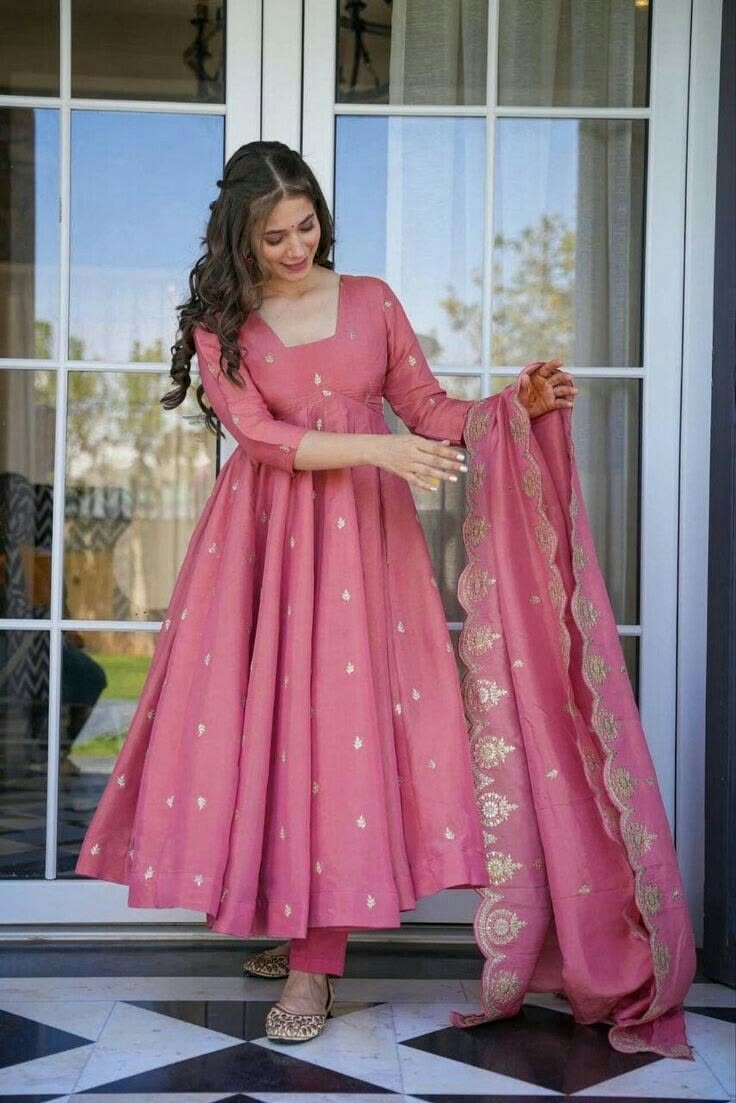
Anarkali Suit Sewing Course
Anarkali Suit Sewing Course
Couldn't load pickup availability
Whether you’re a complete beginner or someone seeking to refine your existing skills, their comprehensive Anarkali suit stitching course offers a structured and enriching learning experience.
This course delves into the intricacies of....
★ Understanding and exploring the various Anarkali styles, from the classic A-line silhouette to the contemporary designs featuring panels, flares, and layers.
★ Choosing the perfect fabric is crucial for achieving the desired drape and flow. The course equips you with the knowledge to select the most suitable fabrics, be it luxurious silks, shimmering georgettes, or comfortable cottons.
★ Learn the art of creating accurate Anarkali suit patterns from scratch. You will be taught and guided through the process of taking precise measurements, drafting bodices, skirts, and sleeves, ensuring a perfect fit.
★ As Anarkali suits often come adorned with exquisite embellishments. The course introduces you to essential embroidery techniques well-suited for Anarkali suits, such as zardozi, aari work, and chikankari.
★ Master the essential sewing techniques required to construct a flawless Anarkali suit. You’ll learn about seams, darts, gathers, and buttonholes, all under the watchful guidance of experienced instructors
Level: Beginner→ Improver
Outcome: Draft, Cut, and Sew a complete Anarkali suit set
Learning Mode : In-Studio / Online Option
Duration: 6 Weeks (1 session per week | 2 hours each)
💥 Optional: If you would like to learn Neckline and Sleeves variations add 2 weeks to the end of this course.
🎯 Course Objective
By the end of this course, students will:
Understand Anarkali garment structure
Take accurate body measurements
Draft a custom-fit Anarkali pattern
Cut fabric correctly using grainline principles
Construct a full Anarkali suit including:
Bodice drafting
Flared panels / kalis
Sleeves drafting
Lining (optional)
Basic dupatta finishing
Apply professional finishing techniques
✂️ WEEK 1 — Foundations + Bodice Drafting
Focus:
Understanding the garment + drafting the base
Identify parts of an Anarkali suit
Take correct body measurements
Draft a basic fitted bodice
Topics Covered:
Introduction to Anarkali styles (floor-length, panelled, umbrella)
Fabric selection:
Cotton, rayon, silk blends, georgette, chiffon
Tools & materials overview
Measurement taking:
Bust, waist, shoulder, armhole, length
Practical Work:
Draft front & back bodice block
Add seam allowance
Label pattern pieces
Homework:
Refine pattern
Prepare fabric for next class
✂️ WEEK 2 — Skirt / Panels (Kalis) Drafting + Cutting
Focus:
Creating the signature Anarkali flare
Understand panel construction
Draft flared kalis accurately
Layout fabric correctly
Topics Covered:
Panel calculation (number of kalis)
Flare control (moderate vs dramatic)
Grainline importance
Fabric layout techniques
Draft panel (kali) pattern
Cut Bodice pieces
Skirt panels
Sleeves (basic)
Homework:
Mark notches & panel joins
Organise pieces for sewing
✂️ WEEK 3 — Construction Stage
Focus:
Assembling the garment
Join panels evenly
Construct bodice cleanly
Attach skirt to bodice
Topics Covered:
Sewing order (critical for clean finish)
Plain & French seam (optional)
Panel joining techniques
Sleeve attachment basics
Practical Work:
Sew all panels together
Construct bodice
Join bodice + skirt
Start sleeve attachment
Homework:
Complete remaining seams if needed
✂️ WEEK 4 — Finishing + Dupatta
Focus:
Professional finishing & final garment
Finish hems neatly
Add closures
Improve garment presentation
Topics Covered......
Hemming techniques:
Narrow hem
Rolled hem
Neckline finishing- Facing / bias
Closures -Zipper / hooks
Dupatta basics:
Measuring
Cutting
Edge finishing (fine/narrow rolled hem)
Practical Work:
Final garment assembly
Hem Anarkali
Finish neckline
Complete dupatta
🧵 What you will complete sewing
✔ 1 Custom-fit Anarkali Suit
✔ Basic dupatta
✔ Personal pattern for reuse
🧰 What to bring:
Fabrics:
Main fabric: 3 –5 meters (depending on flare)
Lining (optional): 1.5–2 meters
Dupatta fabric: 2–2.5 meters
Sewing machine
Fabrics as mentioned above
Drafting / Butcher's / Packaging paper for drafting
Dressmaking pins (Glass, Pearl, or Plastic head)
Measurement tape
Tailors chalk
Matching coloured cottons/ threads along with Extra Bobbins
Scissors
Rulers for Pattern drafting
Hand sewing needles
Extra sewing machine needles to have handy
Pens / Pencil
Note book to take down measurements
★★ Please note the weekly breakdown is a guide only and may or may not always go as to plan. By the end of the course you will eventually achieve the outcome mentioned★★
💳 How to Pay
We accept payment via PayID or Direct Bank Transfer only — no cash payments accepted.
Afterpay can be used for full upfront payment only.
PayID: 0423 088 671
Payment must be received at least 3 days before your class date to secure your spot
Once the enrollment form is filled and your order is placed, please make payment using the details above
Share